
Drive Your Innovation From Enzymatic To Energetic
Next-Generation DNA Synthesis (NGDS)
Sustainable, Enzymatic DNA Synthesis Platform
Transform Your Research. Protect Our Planet.
The Environmental Challenge of Chemical DNA Synthesis
Traditional chemical DNA synthesis, though foundational for genomics and biotechnology, presents serious challenges for modern laboratories and responsible innovation:

Toxic Chemistry & Hazardous Waste
Chemical methods rely on dangerous solvents like acetonitrile and dichloromethane, plus strong acids and oxidizers in every cycle. This creates hazardous waste, increases lab risks, and demands costly disposal procedures.
High Carbon Emissions
Energy-intensive processes for solvent production, transportation, and waste handling add significantly to your carbon footprint.

ESG Compliance Barriers:
Such practices make it difficult for organizations to meet growing Environmental, Social, and Governance (ESG) standards—posing operational, reputational, and regulatory challenges.

Efficiency Limitations
Chemical synthesis struggles with longer DNA constructs due to compounding errors and lower yields, constraining cutting-edge genomics and synthetic biology applications.
NGDS: The Eco-Friendly Revolution in DNA Synthesis
YD Biolabs’ proprietary Next-Generation DNA Synthesis (NGDS) platform is a breakthrough solution—delivering high-fidelity, on-demand DNA synthesis while dramatically minimizing environmental impact. NGDS empowers labs to create precise oligonucleotides in-house, revolutionizing science sustainably.
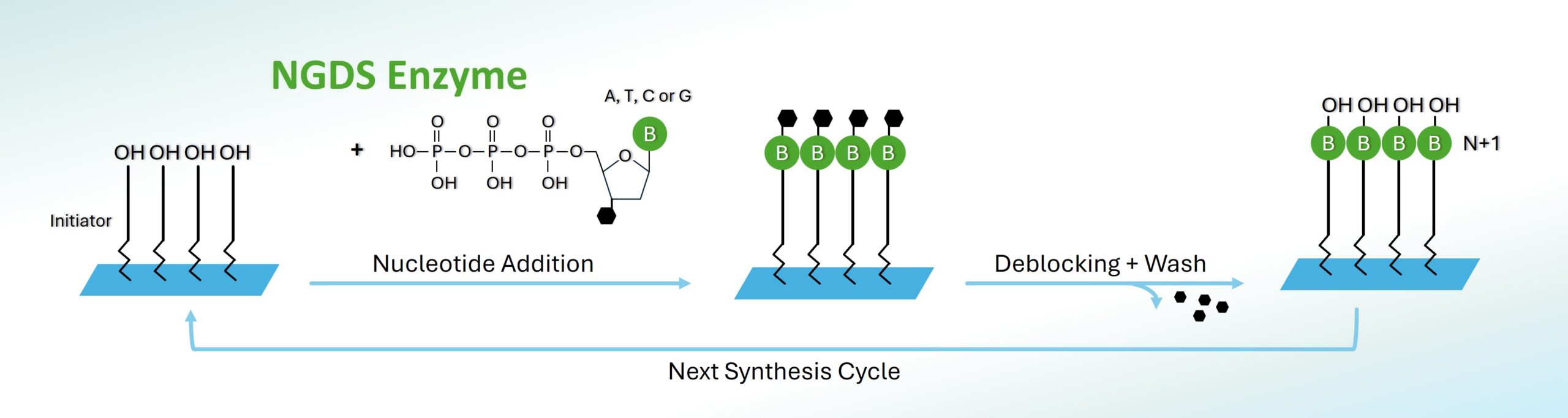
NGDS Cycle – Enzymatic DNA Synthesis Workflow
Our NGDS platform employs a highly efficient, two-step enzyme-driven cycle to achieve precise sequence-specific synthesis of oligonucleotides:
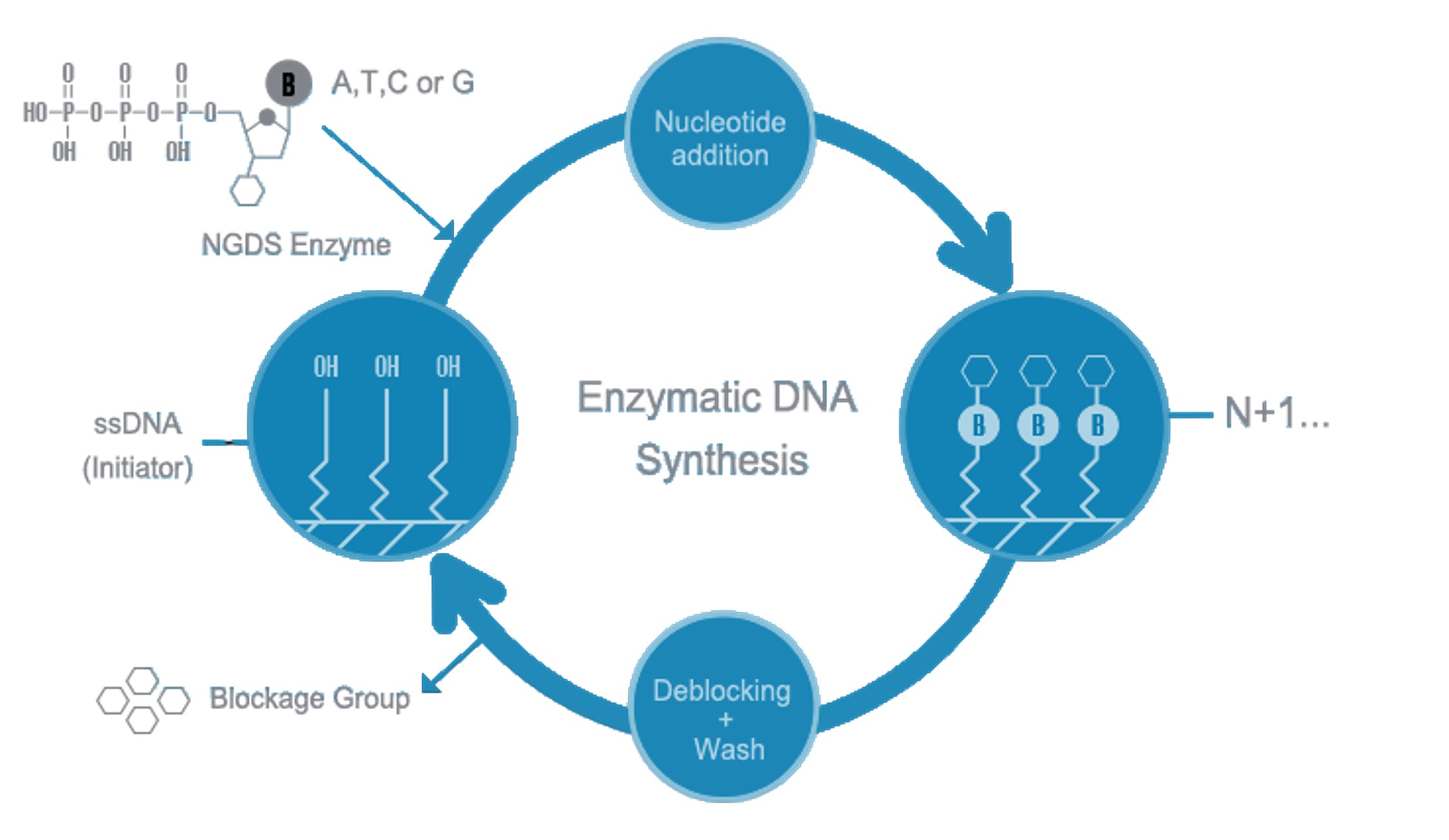
Step 1: Targeted Nucleotide Addition (N+1)
A specialized NGDS enzyme adds a single, 3’-blocked nucleotide (A, T, C, or G) to a solid-supported initiator strand (ssDNA). This controlled nucleotide-addition ensures exceptional accuracy, building the DNA sequence one base (nucleotide) at a time.
Step 2: Controlled Deblocking and Preparation for Next Synthesis Cycle
The 3’-blocking group of incorporated nucleotide is carefully and gently removed through minimal, aqueous wash steps. This deblocking fully restores the integrity of the growing DNA strand, preparing it for the subsequent nucleotide addition.
By repeating this precise cycle, our technology reliably produces oligonucleotides of any desired sequence and length with superior fidelity and efficiency.
Benefits of NGDS
🌱 Environmental Excellence 🌱
- Zero Toxic Solvents: Water-based, enzymatic reactions—no more hazardous organic solvents.
- Minimal Carbon Footprint: Low energy usage and reduced reagent transport emissions.
- Waste-Free: Almost no toxic waste; lab safety and cleanup are dramatically improved.
- Supports ESG Goals: Demonstrates real action toward corporate sustainability and compliance.
🧪Operational and Scientific Advantages🧪
- On-Demand, In-Lab Synthesis: No reliance on external providers; gain full project control.
- Accurate, High-Fidelity Results: Enzymatic precision for trustworthy, reproducible science.
- Simple Workflow: Minimal handling, fast iterations, and easy integration into research pipelines.
NGDS vs. Chemical Synthesis: ESG and Environmental Impact
Aspect | NGDS (Enzymatic) | Chemical Synthesis |
Environmental Impact | Water-based, eco-friendly, near-zero wastes | Heavy toxic waste; hazardous solvents |
Carbon Emissions | Very low, minimal energy use | High; energy-intensive throughout |
Safety | Safe for personnel, non-toxic reagents | Risky: hazardous chemicals & vapors |
ESG Alignment | Strong: advances sustainability, compliance | Weak: complex mitigation, high liability |
Turnaround and Workflow | Immediate, in-house, scalable | Outsourced, potential supply delays |
Application of NGDS
Custom Oligo Synthesis
For gene assembly, barcoding, probe, and aptamer development.
CRISPR Guide RNA Design
Sustainable synthesis for rapid, accurate CRISPR workflows.
Synthetic Biology
Build complex biological circuits with high accuracy and low impact.
High-Throughput Sequencing
Barcodes and libraries for NGS, with minimal waste.
Ready to join the future of science—without compromise?
YD Biolabs – Where Enzymes Meet Nucleic Acids, and Science Meets Sustainability.
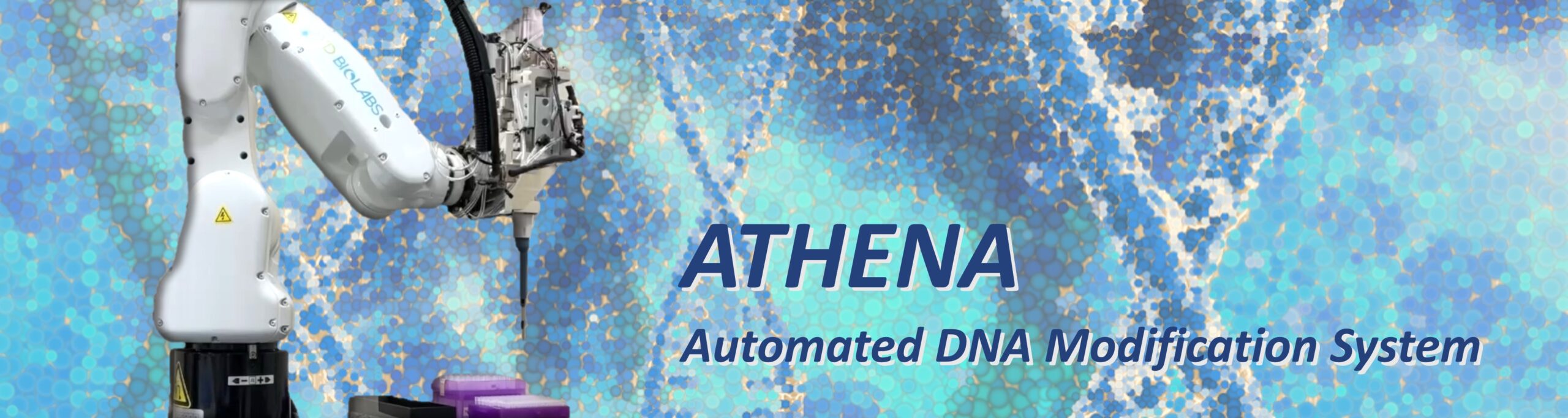
ATHENA - Automated DNA Labeling System
Transforming DNA labeling from complex protocols into simple breakthroughs
The Challenge: Current DNA Labeling Methods Fall Short
DNA end labeling and modification are fundamental techniques in molecular biology, yet both chemical and enzymatic labeling approaches face significant limitations that constrain research and production capabilities. Current methods present multiple challenges that impact efficiency, yield, purity, and safety in laboratory workflows.
Hazardous reagents:
Traditional DNA labeling methods often use toxic chemicals or radioisotopes, posing safety risks in the lab.
Inconsistent enzymatic labeling
Manual oligonucleotide labeling workflows can introduce variability, especially in micro-volume or multi-step reactions.
Incomplete labeling & low purity
Some methods fail to fully label DNA ends, reducing the efficiency of downstream applications.
Substrate compatibility issues
Not all enzymes work on every DNA end type, requiring multiple tailored steps.
Limited sequence compatibility
Structured DNA or secondary structures may block enzymatic labeling.
High cost & low scalability
Chemical handling, extensive purification, and manual workflows increase time and expense, limiting high-throughput capacity.
The Solution: ATHENA – Automated DNA Labeling System
YD Biolabs’ ATHENA platform is a fully automated DNA labeling system designed to overcome the limitations of traditional chemical and manual methods. By leveraging enzymatic DNA labeling, ATHENA enables high-quality, reproducible oligonucleotide labeling directly in the lab, reducing variability, turnaround time, and safety risks associated with conventional workflows.
The ATHENA platform supports scalable oligonucleotide labeling workflows and in-house DNA labeling services, allowing researchers and organizations to generate high-purity labeled oligos efficiently for applications ranging from basic research and diagnostics to large-scale production.
Empowering Scientific Discovery
ATHENA transforms DNA labeling from a manual, error-prone process into a robust, high-throughput, and reproducible workflow. By addressing the challenges of traditional DNA modification, ATHENA ensures consistent results, precise labeling, and enhanced laboratory efficiency, empowering modern research and production pipelines.
Advantages of ATHENA – Automated DNA Labeling System
Environmentally friendly processes
Aqueous reactions replace toxic organic solvents.
Higher purity labeled oligos
Reduced chemical damage and fewer side products.
Improved scalability
Efficient for both research-scale and large-scale production.
Consistent enzymatic labeling
Minimized run-to-run variation compared to chemical methods.
Applications of ATHENA – Automated DNA Labeling System
Probe Preparation
- dPCR and qPCR probes for quantitative analysis and detection
- FISH probes for fluorescence in situ hybridization studies
- Microarray probes for high-throughput genomic analysis
Therapeutic Development
- Oligo-drug conjugation for targeted therapeutic delivery
- Oligo-peptide conjugation for enhanced bioactivity and specificity
- Gene therapy applications utilizing modified oligonucleotides
Research and Diagnostics
- DNA immobilization for biosensor platforms and diagnostic devices
- Mixed oligonucleotide pool labeling for gene-target catcher applications
- NGS sequencing preparation and molecular diagnostics
YD Biolabs – Where Enzymes Meet Nucleic Acids, and Science Meets Sustainability.
Antibody-eOligoLinker Conjugation (AEOC) Platform
Precision Conjugation for Advanced Therapeutics and Diagnostics
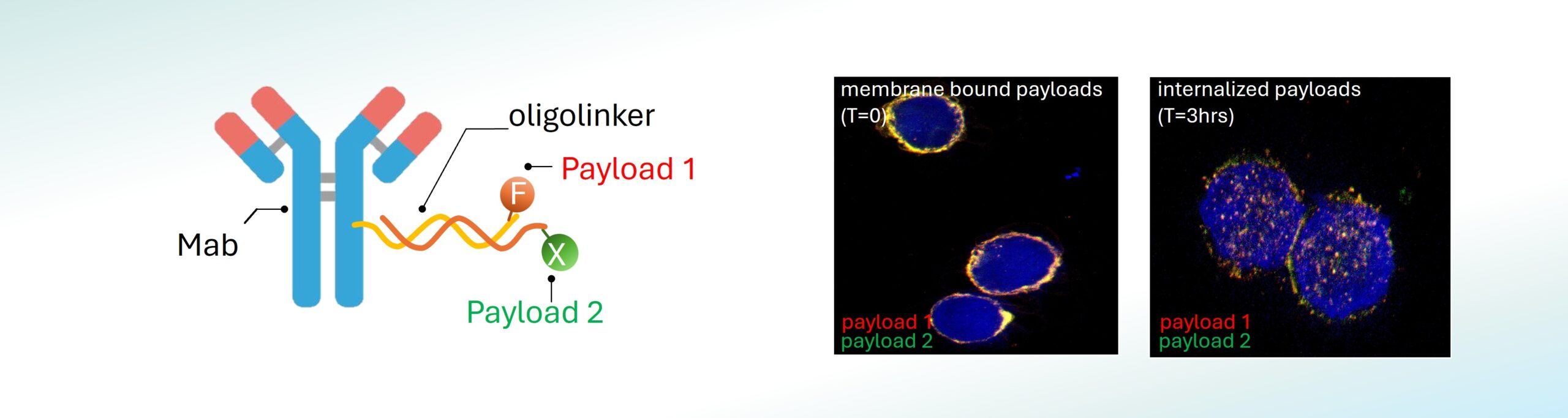
YD Biolabs’ Antibody-eOligoLinker Conjugation (AEOC) platform is a next-generation technology that uses oligonucleotides as modular linkers to connect multiple payloads to antibodies. By leveraging proprietary enzymatic oligonucleotide modification and conjugation technologies, the platform enables precise, site-specific attachment of diverse payloads while maintaining high drug-to-antibody ratios (DAR) and reproducible quality for research, diagnostics, and therapeutic applications.
YD Biolabs’ Antibody-eOligoLinker Conjugation (AEOC) Platform vs. Traditional AOC Platforms
| Feature | YD Biolabs AEOC Platform | Conventional Chemical Conjugation | DSS/SMCC Crosslinker Platforms |
|---|---|---|---|
| Conjugation Precision | Enzyme-driven, site-specific, highly uniform | Random, broad, variable | Variable, lysine/cysteine-targeted |
| DAR/OAR Control | Tunable & high, tightly controlled | Heterogeneous, inconsistent | Low to moderate, less controlled |
| Linker Chemistry | Hydrophilic, DNA-based, low aggregation | Often hydrophobic, increases aggregation | Often hydrophobic, possible side reactions |
| Payload Flexibility | Multi-payload, wide oligonucleotide variety | Chemistry-limited, often single payload | Typically single, limited |
| Production Scalability | Highly scalable | Labor-intensive, multi-step | Moderate, antibody-dependent |
| Aggregation/Immunotoxicity | Minimal (hydrophilic linker) | Elevated aggregation risk | Moderate to high risk |
| Application Breadth | Broad: therapeutics & diagnostics | Diagnostics, some therapeutics | Diagnostics, some therapeutics |
Features of Antibody-eOligoLinker Conjugation (AEOC) Platform
Oligonucleotide as a Hydrophilic Linker
Reduces aggregation and immunotoxicity of hydrophobic payloads.
Aqueous, Enzyme-Driven Reactions
Water-based, enzymatic conjugation preserves antibody activity and avoids toxic solvents.
Modular Linker Design
Enables flexible assembly of multiple payloads, accelerating ADC development.
Flexible and Scalable
Customizable linker composition and precise DAR control for reproducible, high-quality conjugates.
Advantages of Antibody-eOligoLinker Conjugation (AEOC) Platform
🎯
Targeted Precision
Enables site-specific, multi-payload conjugation, ensuring high uniformity between batches.
💧
Enhanced Stability
Hydrophilic linkers improve solubility and prevent aggregation.
🧩
Exceptional Adaptability
Compatible with diverse antibodies and a variety of functional oligonucleotides.
📈
Manufacturing Scalability
Streamlined, enzyme-based process supports easy transition from R&D to GMP-scale production.
Applications of Antibody-eOligoLinker Conjugation (AEOC) Platform
Spatial Transcriptomics & In Situ Sequencing
High-resolution tissue profiling.
Multiplex Immunoassays & Spatial Proteomics
DNA barcodes enable high-throughput detection.
Therapeutic ADCs
Nucleic acid payloads for precision drug delivery.
Next-Generation Immuno-PCR & Hybrid ELISA
Enhanced assay sensitivity and specificity.
Targeted Nucleic Acid Delivery
Efficient platforms for RNA/DNA-based therapeutics.
Single-Cell Multiomics
Oligo-tagged antibodies for integrated profiling.
YD BioLabs – Where Antibodies Meet Nucleic Acids
Driving breakthroughs in next-generation diagnostics, therapeutics, and multiomics solutions.